Shopping for a condo in Fort Myers should feel exciting, not confusing. Yet many buyers hit a wall when lenders start asking about “warrantable” status, reserves, or condo questionnaires. If you want a smooth riverfront or downtown closing, understanding how condo financing works in Lee County can save you time and money. In this guide, you will learn the basics of warrantable vs non-warrantable condos, typical down payments, documents lenders will request, and a simple plan to get pre-approved with fewer surprises. Let’s dive in.
Condo financing basics in Fort Myers
Condos are financed differently than single-family homes because lenders evaluate both you and the building’s association. In Fort Myers, this matters even more due to seasonal ownership, short-term rentals, and mixed-use buildings near the river and downtown. Lenders look at the project’s insurance, reserves, budget health, and rental rules before approving your loan terms.
Warrantable vs non-warrantable
A condo is warrantable when it meets the eligibility standards of Fannie Mae, Freddie Mac, FHA, or VA. This usually means more loan options, lower down payments, and predictable timelines. A non-warrantable condo fails one or more program tests. You can still finance these, but the loan often comes with a higher rate, larger down payment, or a specialized portfolio or jumbo program.
Common triggers for non-warrantable status include:
- High investor or short-term rental concentration
- One owner holding too many units in the building
- Large commercial or hotel components
- Low or waived reserves and high delinquencies
- Missing or insufficient master insurance
- Pending association litigation that could impact the budget
Why Fort Myers condos vary
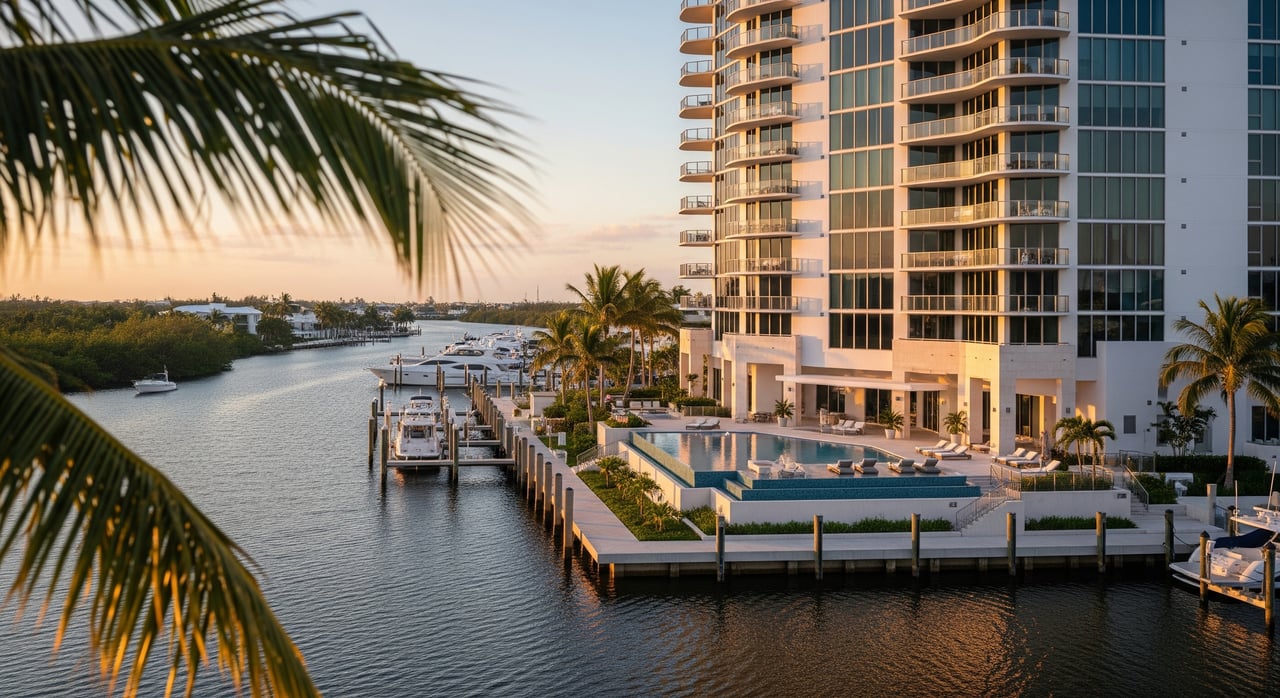
Downtown and riverfront buildings often include amenities, retail space, seasonal use, and active rental programs. These features can be attractive for lifestyle and income, but they also lead lenders to review the project more closely. Flood zones along the river can introduce extra insurance requirements that affect monthly payments and approval.
Loan programs and approvals
The loan you choose depends on the building’s status and your goals. Here is how the main programs apply in Fort Myers.
Conventional options
Conventional loans sold to Fannie Mae or Freddie Mac are common for conforming loan sizes. If the condo is warrantable, you may see lower down payment options and standard pricing. If the project needs a deeper review, a lender may still approve the loan, but you should expect more documentation and possibly a higher down payment.
FHA and VA approvals
FHA and VA can be great options, but both require that the condo project be on the respective approval lists or receive project approval. If you plan to use one of these programs, confirm the building’s status upfront. If the building is not approved, ask your lender about timing and feasibility for a project review before you write an offer.
Jumbo and portfolio loans
If a project is non-warrantable or your loan size is above conforming limits, a jumbo or portfolio loan may fit. These programs are offered by private banks and lenders. Expect higher down payments and stricter underwriting. In Lee County, some local banks and credit unions have deep condo experience and can move faster with the right documents.
Down payments and reserves
Exact down payments depend on the program, building, loan size, and whether the condo is a primary home, second home, or investment.
- Conventional primary in a warrantable building: as low as 3 to 5 percent with lender and program approval. Many lenders prefer 5 to 10 percent.
- Buildings that need a project review: often 10 to 20 percent down.
- Second homes: typically 10 to 20 percent. Some condo overlays push higher.
- Investment properties: commonly 15 to 25 percent. Non-warrantable projects often need 25 percent or more.
- FHA-approved primary residences: minimum 3.5 percent for eligible borrowers, when the project is FHA approved.
- VA-approved primary residences: eligible buyers may qualify with 0 percent down when the project is VA approved.
Lenders also review the association’s reserves. A commonly cited benchmark is at least 10 percent of the annual budget set aside for reserves or a current reserve study that supports planned funding. In Florida, associations can vote to waive reserves. That may help fees short term, but lenders often see it as a risk and may require a larger down payment or deny standard program eligibility.
Documents lenders request early
Getting documents upfront keeps your closing on track. You, your agent, and the seller can work together to assemble the following:
- Completed condo questionnaire from the association or management
- Current year budget and the most recent financial statement
- Reserve study if available and current reserve balances
- Master insurance declarations, including flood and fidelity coverage
- Declaration, bylaws, and articles of incorporation
- Minutes from the last annual meeting and recent board meetings
- Statement of unit delinquencies and any single-entity ownership
- Details on rental policies and any required registrations
- Summary of any pending or recent litigation
Early access to this package helps your lender confirm eligibility, price the loan correctly, and spot potential delays.
Local risk factors to check
Fort Myers buyers should confirm a few items that can impact financing and monthly costs:
- Flood risk and insurance. Many riverfront and low-lying properties sit in FEMA flood zones. If the building is in a mapped zone, flood insurance will be required. The cost affects your monthly payment and qualifying ratios.
- Short-term rentals. High rental activity can reduce the owner-occupied ratio and lead to project reviews or non-warrantable status under some programs. Check lease minimums and caps.
- Litigation and capital projects. Construction defects, structural items, or large assessments can pause eligibility for many programs.
- Florida association records. Associations must maintain budgets and financials and provide certain disclosures. These documents are central to a lender’s review and your due diligence.
Step-by-step to get pre-approved
You can prevent surprise roadblocks by starting the project review alongside your pre-approval.
- Choose a lender with Fort Myers condo experience. Ask how they handle project reviews and non-warrantable options.
- Share the building name and HOA contact with your lender at application. This triggers the condo questionnaire request.
- Ask the seller for key documents right away. Request the budget, financials, insurance declarations, minutes, and any reserve study.
- Verify FHA or VA approval if you plan to use those programs. Get clarity on timelines if the project needs approval.
- Check the flood zone and estimate insurance. If the property is in a flood zone, get a preliminary quote early.
- Get a conditional pre-approval. Ask your lender to list any condo-specific conditions so you know what is still outstanding.
Pre-qualification vs pre-approval
Pre-qualification is a quick estimate based on your information. It is not enough for a condo purchase. A pre-approval includes a documented review of income, credit, and assets, plus an early look at the condo project. For condos, a strong pre-approval clearly states any association documents still needed.
Common surprises and fixes
- Not on FHA or VA lists. Confirm project approval at the pre-approval stage. If not approved, learn what it takes to approve or choose a different loan path.
- Waived or low reserves. Expect a larger down payment or a different program. Review reserves and recent votes in the meeting minutes.
- Pending litigation or large repairs. Material litigation often blocks eligibility. Get details from the association and ask your lender about next steps.
- Flood insurance costs. These can move your monthly payment. Estimate early so your budget stays accurate.
- Slow condo questionnaire. Encourage the HOA or manager to respond quickly. Delays here are a top cause of slow closings.
Buyer quick checklist
Use this list to keep your condo purchase on track in Fort Myers:
- Identify lender with local condo expertise
- Provide HOA contact and building name with your application
- Request condo questionnaire, budget, financials, and insurance early
- Review meeting minutes for special assessments and reserve decisions
- Confirm FHA or VA approval if needed
- Check flood zone and estimate flood insurance
- Discuss non-warrantable backup options if the project looks borderline
How we help in Fort Myers
Buying a condo downtown or along the Caloosahatchee should be a pleasure. You deserve a partner who knows the buildings, understands association dynamics, and can coordinate the right documents fast. We help you set the strategy, connect you with proven local lenders, and manage the flow of HOA information so your loan stays on schedule.
With neighborhood expertise across Southwest Florida and a high-touch, family-led approach, our focus is to reduce friction and protect your timeline. Whether you are choosing a riverfront retreat, a second home near dining and marinas, or a low-maintenance lock-and-leave, we guide you through financing details and association reviews with clarity.
Ready to move forward with confidence? Reach out to schedule a planning call with Mike & Kylie Fowler. We will help you map your financing path, align the right lender, and secure the condo that matches your lifestyle.
FAQs
What makes a Fort Myers condo non-warrantable?
- Lenders often flag high investor occupancy, large commercial components, single-entity ownership concentration, low or waived reserves, missing insurance, delinquencies, or pending litigation.
Can I buy a non-warrantable condo with 10 percent down?
- Some lenders may allow it, but many non-warrantable loans require 25 percent or more, along with higher rates or portfolio programs.
Do FHA and VA work for Fort Myers condos?
- Yes, if the building is approved by FHA or VA; without project approval, you will need a different loan program or to pursue project approval with your lender.
How does flood insurance affect my mortgage approval?
- If the building is in a mapped flood zone, flood insurance is required and adds to your monthly payment, which can affect your qualifying ratios and loan amount.
What happens if the HOA has waived reserves?
- Lenders often treat waived reserves as a risk, which can mean a larger down payment, stricter underwriting, or ineligibility for standard programs.
How long does the condo questionnaire take to complete?
- Timelines vary by association and management company; this document is a frequent closing delay, so request it as soon as you apply with your lender.